
 26 Mar, 2026 • 3 minute read
7 signs your client handoff is too scattered
Good teams work hard on the quality of the work itself.
They sharpen the thinking, improve the draft, refine the design, and check the details. But when the time comes to deliver that work to a client, buyer, counsel, or partner, the process often becomes far less disciplined.
The file is sent by email. Comments come back in chat. Sign-off happens on a call. A revised version lands in a shared folder. Then somebody asks which file is current, where the latest feedback sits, and what exactly was approved.
This is common. It is also expensive.
Not always in money. Often in delay, confusion, avoidable risk, and a weaker client experience.
Here are seven signs your client delivery process may need a better system.
1. Scattered feedback
You send the draft, disclosure, or working file in one place, but the response comes back through email, chat, calls, and side messages. That slows review and forces your team to piece the full picture together by hand.
2. No clear place to respond
When clients or counterparties have to guess where feedback belongs, friction begins at once. Some reply to the email. Some send a private message. Some wait for the next meeting. A good process gives them one obvious place to review the work and respond.
3. Unclear decisions
“Looks good” is not enough. Later, it becomes unclear what was approved, by whom, and against which version. In sensitive work, that kind of ambiguity creates unnecessary risk.
4. Version confusion
This is one of the oldest signs of a loose process. Version confusion wastes time, weakens confidence, and increases the odds that someone reviews the wrong material.
5. Too much onboarding
Clients, buyers, counsel, and outside partners do not want training, app installs, or admin help just to review work and reply. If the system feels heavy, people fall back to email, and the workflow begins to break apart.
6. Convenience over control
Email links and shared folders are fast, but they are not built for controlled delivery. Files can be forwarded, copied, and discussed away from their context. That is not just a workflow weakness. It is also a security weakness.
7. The handoff feels messy
This is often the clearest sign of all. The work is done, but the last stage still feels untidy. Feedback is scattered. Next steps are loose. Someone is still trying to confirm what was decided. That usually means the delivery layer itself was never properly designed.
What these signs usually mean
If several of these signs feel familiar, the issue may not be your team. It may be the delivery layer around the work.
Many firms still deliver important work through a patchwork of email threads, shared folders, chat messages, and calls. That may work when the stakes are low. But when the work is sensitive, valuable, or complex, the cracks become visible — especially in deal work, diligence, client delivery, and other high-trust engagements.
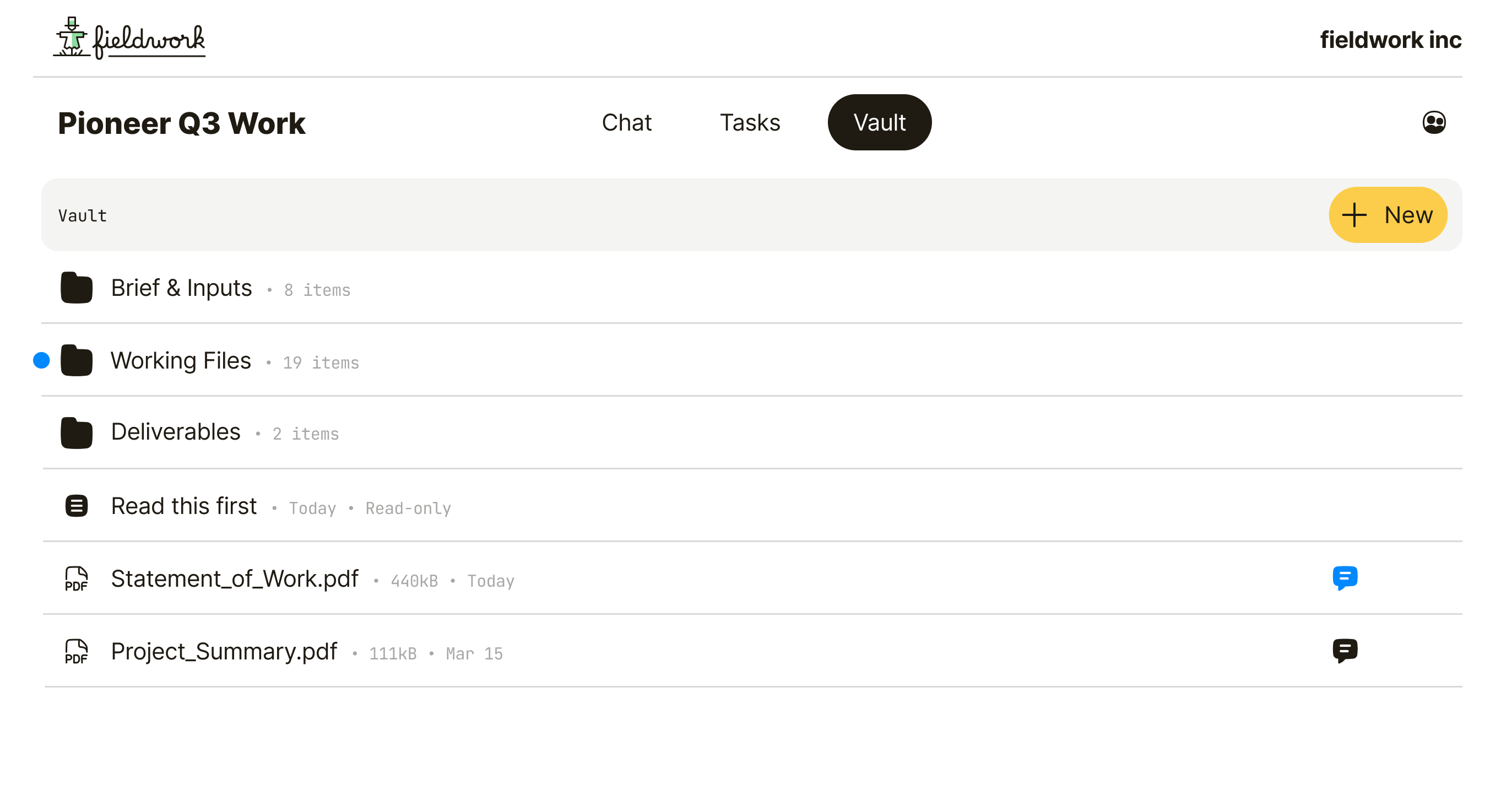
Inside the room, the Vault keeps briefs, working files, deliverables, and discussion in one controlled place.
Qaxa gives every engagement one private room. Files, messages, notes, comments, decisions, and next steps stay together — instead of spreading across inboxes, links, and side channels.
Clients, buyers, counsel, and external partners can join in the browser, without guest licenses or heavy onboarding. Your team keeps the work organized, controlled, and easier to follow.
Good work deserves a better handoff. Sensitive work deserves a more secure one.