
 27 Aug, 2025 • 2 minute read
Why rooms are the foundation of Qaxa
That is the foundation of Qaxa.
Most tools force work into structures that never feel quite right. A project may be overloaded with features you do not need. A channel may be good for discussion, but weak for actual execution. Files live somewhere else. Tasks live somewhere else again.
Qaxa takes a different approach: start with one private room, then let the work happen inside it.
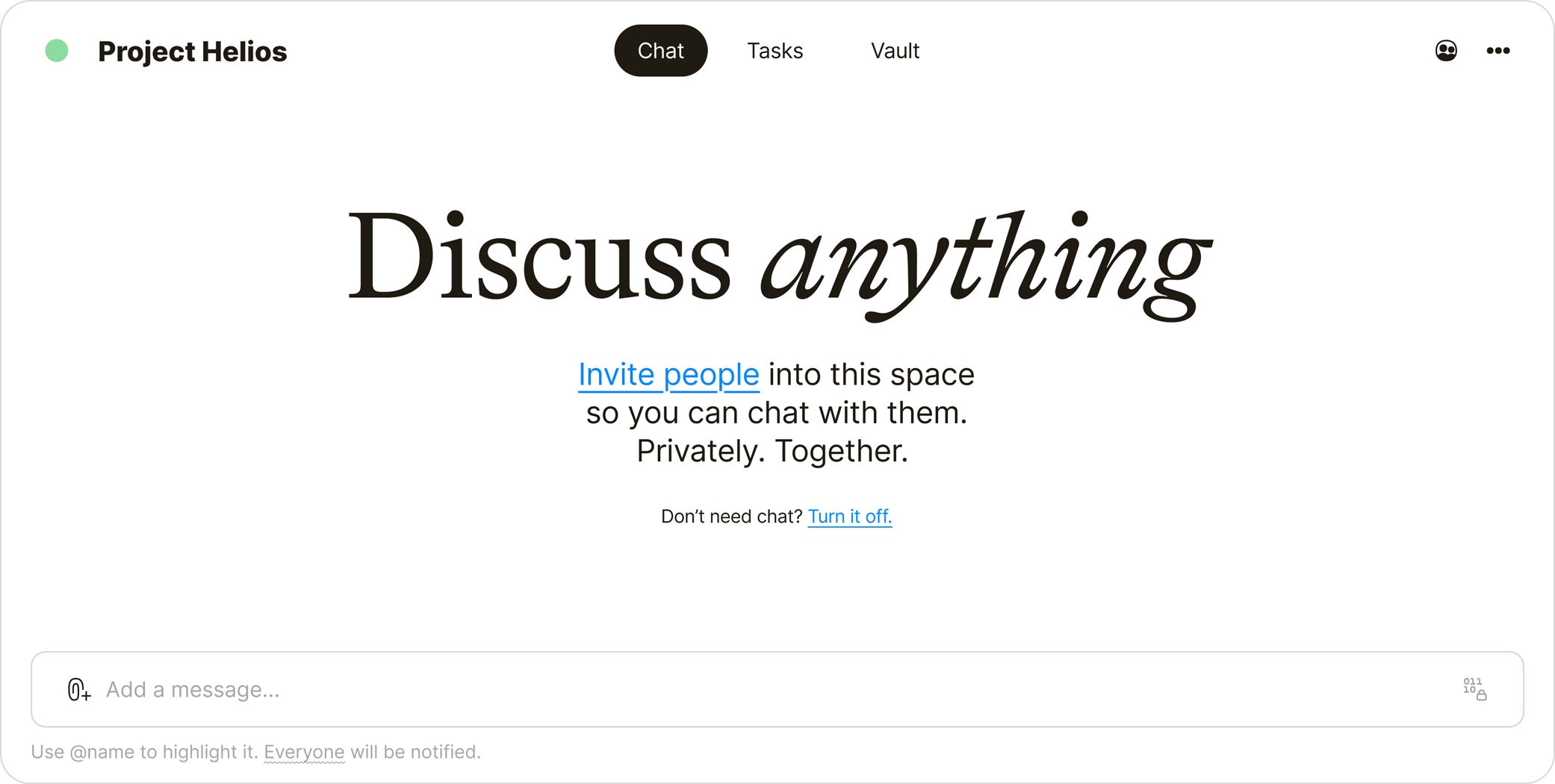
Private compartmentalization
Rooms are designed to keep work separated by context.
That means a room can represent:
- a client relationship
- a legal matter
- an internal initiative
- a product stream
- a private workspace for one person
Each room has its own members, its own content, and its own collaboration context.
That separation matters because not every conversation, file, or task should live in the same shared environment.
How it works
Create a room
Give the room a name. Keep it private to yourself, or invite selected collaborators.
A room can begin as a personal workspace and later become shared when the work requires it.
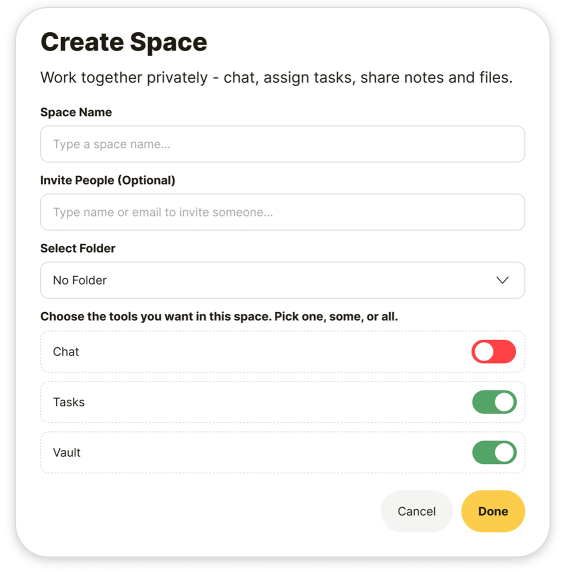
Choose the tools inside it
Each room can include the tools you need for that specific work — such as chat, tasks, files, and notes.
That means one room can be built around discussion and coordination, while another can stay quieter and focus only on files and notes.
The structure adapts to the work instead of forcing every room into the same pattern.
Invite the right people
Access is handled at the room level. The people inside the room can collaborate there. People outside it cannot.
That makes it easier to keep work compartmentalized without creating complicated permissions for every individual item.

Keep activity visible without noise
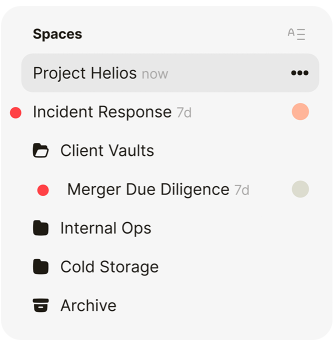
When something changes in a room, Qaxa uses quiet signals in the sidebar so you can see where attention is needed without turning the interface into a stream of interruptions.
Why the architecture matters
Rooms are isolated from one another.
Access to one room does not grant access to another. Each room is its own collaboration boundary, with its own membership and its own encrypted content.
This is one of the key ideas behind Qaxa: privacy and structure should begin at the room level, not be patched together later through scattered permissions, external links, or disconnected tools.
The result
A room gives you one place to hold the work:
- the people involved
- the conversation
- the files
- the notes
- the tasks
- the context around them
Private when it needs to be. Shared when it should be. Structured around the work itself.
What’s next
We are exploring more granular controls, including custom roles and read-only modes. But the principle will stay the same: the room is the foundation because it gives work a clear boundary from the start.